Methwold's Estate
Midnight's ChildrenMethwold’s Estate is a group of four palatial houses on a low rise above the sea in Bombay, and the childhood world Saleem Sinai recalls as his kingdom. Sold by William Methwold just before independence, the houses pass to Indian families with their contents intact and their transfer deferred until midnight on August 15, 1947. The Estate’s architecture, residents, and repeated departures make it more than a backdrop: it gives the novel a contained social world in which the transfer of property echoes a transfer of power, and in which Saleem’s intimate family history is entangled with the country’s.
Setting and Architecture
The road to the Estate turns off Warden Road, past shops and Bombelli’s confectionery, and climbs a small hill before curving toward the sea. Below it lies Breach Candy Swimming Club, whose pool resembles British India and excludes people with black skin. The surrounding city is changing: the recollection places the hill before the pink skyscraper built by the Narlikar women, while the Estate itself occupies a vantage point above a coastline shaped by reclamation and the conversion of Bombay’s islands into a peninsula.
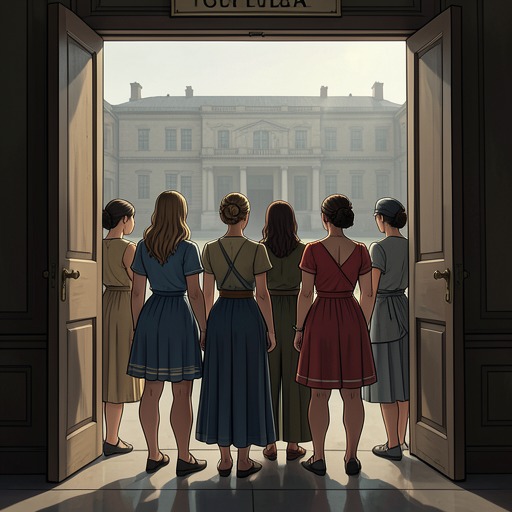
The Estate consists of four similar, substantial houses, with red gabled roofs, corner turrets, verandahs, and servants’ quarters reached by concealed spiral iron staircases. Methwold named them after European palaces: Versailles Villa, Buckingham Villa, Escorial Villa, and Sans Souci. Bougainvillaea, pale-blue pools, rock gardens, tamarind trees, roses, butterflies, and cane chairs complete the landscaped setting. The names and design project European grandeur onto Bombay; the houses stand, in Saleem’s description, as conquerors’ residences above a diminished Olympus.
Sale and the Transfer of Power
On June 19, 1947, two weeks after Ahmed and Amina Sinai arrive in Bombay, the couple make a bargain with Methwold. He sells the empty houses for a low price, but imposes two unusual terms: the buyers must retain everything in the houses, and legal transfer must wait until midnight on August 15. Amina’s questions about whether even a spoon, lampshade, or comb may be removed expose how completely the deal binds the new owners to the departing owner’s world. Methwold insists that the houses be taken lock, stock, and barrel, presenting his conditions as a departing colonial’s final game.
The date of transfer places private property and national history on the same clock. The Indian families occupy the houses before they formally own them, living among the former owner’s belongings and accommodating his customs. Methwold’s own explanation invokes his ancestor’s part in building Bombay and his wish to play a part at this historical juncture. His estate thus stages independence not as an instantaneous clearing away of the past, but as a handover in which inherited objects, routines, and social arrangements remain in place.
Residents and Childhood Society
The families selected by Methwold form the center of Saleem’s early world. Homi Catrack, a film magnate and racehorse owner, lives there with his daughter Toxy and her nurse, Bi-Appah. In Sans Souci are Ibrahim Ibrahim, his sons Ismail and Ishaq, and Ismail’s wife Nussie, nicknamed Nussie-the-duck. Escorial Villa is divided into flats: the Dubashes live on the ground floor, and Doctor Narlikar occupies another apartment. Commander Sabarmati and Lila live upstairs with their two young sons, later nicknamed Eyeslice and Hairoil. Ahmed and Amina are among the families drawn to the Estate by its affordable houses.
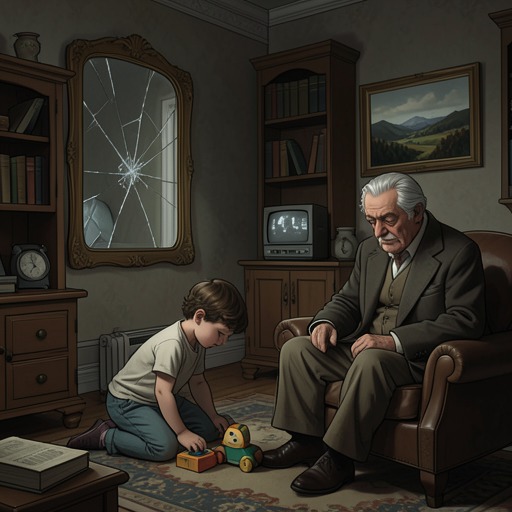
The narrator’s later account makes the residents’ domestic lives part of Saleem’s unusual education. After Wee Willie Winkie tells the families that the first birth will make their new homes real, Amina agrees to let the infant Saleem visit each household in turn. Mary Pereira pushes him in a sky-blue pram around the red-tiled houses. The adults, unaware that the child will later remember and recount what he witnessed, conduct their lives in his presence. The Estate becomes a network of domestic interiors through which Saleem’s childhood perspective can disclose neighborhood secrets, anxieties, ambitions, and conflicts.
Change, Departure, and Narrative Meaning
The Estate does not remain a stable childhood kingdom. After the destruction of Bombay’s water supply, thirsty stray cats gather in the better-off districts where households have their own tanks, and overwhelm the gardens and interiors of the hilltop houses. The invasion turns a civic crisis into a disruption of private comfort: servants cannot drive the cats away, gardens are damaged, and the residents find their homes no refuge from the city’s distress.
Later, Saleem recalls Methwold’s Estate amid political turmoil and personal confusion, using the familiar place as a deliberate return point in his narration. The neighborhood also undergoes a series of departures. Saleem’s revenge is followed by the appearance of hand-painted FOR SALE signs in the gardens of Versailles Villa, Escorial Villa, and Sans Souci, but not in his family’s garden. The signs register the dispersal of the community: Toxy’s household disappears after its sale; Lila loses custody of her sons, who leave for the care of the Indian Navy while Commander Sabarmati serves his prison term; and the Ibrahim home is put up for sale after Ishaq’s hotel is burned by gangsters. The once-concentrated neighborhood breaks apart, and its houses become markers of lives displaced from the shared childhood setting.
For Saleem, the Estate persists as both a remembered place and a narrative device. Its domestic spaces hold the first scenes of his family and neighborhood histories, while its real-estate transaction compresses colonial departure and Indian independence into a single, carefully timed handover. The novel’s later journeys and separations sharpen that contrast: the crowded hilltop world of childhood gives way to exile and loss, but the Estate remains the place through which Saleem can return to the origins of the story he tells.